
Cocoa and oil palm
High-yield oil palm and rehabilitated cocoa farms give households a longer-term income. Intercropping with nitrogen-fixing and timber trees improves soil and shade.
What AVDP does
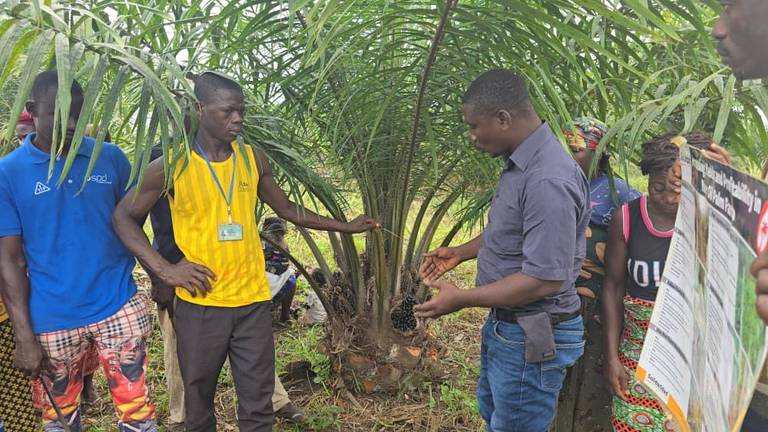
- High-yield oil palm for around 5,000 households
- 155,250 gliricidia and timber seedlings for intercropping in 2026
- Oil palm and cocoa multi-stakeholder platform, launched in Kenema in August 2023
Cocoa: from the farm to the cooperative
Improved planting material, shade trees and organised selling help cocoa farmers earn more from every harvest.
Step 1 of 5
Improved seedlings, planted with shade
Farmers plant improved cocoa from SLARI's clonal gardens, intercropped with gliricidia and timber trees that shade the young cocoa and protect the soil.
Show as table
| Step | What happens |
|---|---|
| 1. Improved seedlings, planted with shade | Farmers plant improved cocoa from SLARI's clonal gardens, intercropped with gliricidia and timber trees that shade the young cocoa and protect the soil. |
| 2. Ripe pods are harvested | Cocoa pods grow straight from the trunk. When they turn yellow or orange, farmers cut them and break them open to take out the wet beans. |
| 3. Fermenting brings out the flavour | The wet beans are heaped or boxed under banana leaves for several days. Fermenting develops the flavour that buyers look for. |
| 4. Drying in the sun | The beans are spread on raised tables and turned until they are dry, so they keep without going mouldy. |
| 5. Sold through the cooperative | Dry beans are bagged and sold, mostly through the cooperatives' local agents. AVDP also supplies processing equipment to cocoa model farms. |
Oil palm: from fruit bunch to red oil
Better seedlings and processing machines mean more oil for less heavy work.
Step 1 of 5
High-yield planting material
AVDP supplies improved, high-yield oil palm seedlings to around 5,000 households, and promotes land titles in women's own names for permanent plantations.
Show as table
| Step | What happens |
|---|---|
| 1. High-yield planting material | AVDP supplies improved, high-yield oil palm seedlings to around 5,000 households, and promotes land titles in women's own names for permanent plantations. |
| 2. Harvesting the fruit bunches | When the bunches ripen they are cut down with a pole or cutlass and carried to the processing site. |
| 3. Boiling the fruit | The loose fruit is boiled, which softens it and stops it going sour, so the oil keeps well. |
| 4. Pressing out the oil | Machines pound and press the fruit to squeeze out the red oil, work that is slow and heavy by hand. AVDP is supplying processing equipment to oil palm model farms. |
| 5. Cleaned, stored and sold | The oil is cleaned by heating, poured into containers and sold, with some kept for the family. |
Cocoa and oil palm: from seed to market
What AVDP does at each step, from the seed a farmer plants to the buyer who pays for the harvest.
Planting material
Improved cocoa from SLARI's clonal gardens; high-yield oil palm for around 5,000 households.
Farming
Farms intercropped with gliricidia and timber trees: 155,250 seedlings in 2026.
Processing
Value-addition equipment for cocoa and oil palm model farms.
Organising
Cooperatives; cocoa is mostly sold through the cooperatives' local agents.
To market
A commodity platform links producers with processors, transporters, buyers and banks.
Show as table
| Step | What AVDP does |
|---|---|
| Planting material | Improved cocoa from SLARI's clonal gardens; high-yield oil palm for around 5,000 households. |
| Farming | Farms intercropped with gliricidia and timber trees: 155,250 seedlings in 2026. |
| Processing | Value-addition equipment for cocoa and oil palm model farms. |
| Organising | Cooperatives; cocoa is mostly sold through the cooperatives' local agents. |
| To market | A commodity platform links producers with processors, transporters, buyers and banks. |
The farming year in Sierra Leone
When each crop is planted and harvested. Months are typical; the rains, and so the work, can start earlier or later.
- CocoaMain harvest and marketing peak from October to December, finishing by February.
- Oil palmMost palm oil is made and sold from March to June. Harvests run into June in Bo, Kenema and Kailahun.
- Harvest
Show as table
| Crop | Harvest | Note | Source |
|---|---|---|---|
| Cocoa | October to January | Main harvest and marketing peak from October to December, finishing by February. | FEWS NET, October 2016 to February 2017 |
| Oil palm | March to June | Most palm oil is made and sold from March to June. Harvests run into June in Bo, Kenema and Kailahun. | J-PAL / IPA inventory credit study; FEWS NET, May 2013 |
One platform, every link in the chain
The oil palm and cocoa multi-stakeholder platform, launched at Albertson in Kenema on 9 August 2023, brings everyone in the two value chains to one table.
- Producers
- Processors
- Agro-dealers
- Transporters
- Marketers
- Cooperatives
- Apex Bank and rural finance
- Government agencies
Show as table
| Member | Role |
|---|---|
| Producers | Member of the oil palm and cocoa platform |
| Processors | Member of the oil palm and cocoa platform |
| Agro-dealers | Member of the oil palm and cocoa platform |
| Transporters | Member of the oil palm and cocoa platform |
| Marketers | Member of the oil palm and cocoa platform |
| Cooperatives | Member of the oil palm and cocoa platform |
| Apex Bank and rural finance | Member of the oil palm and cocoa platform |
| Government agencies | Member of the oil palm and cocoa platform |
Related news and notices
Related news
All news and stories- Video
Voices from the Field: High-Yield Oil Palm Restores Hope for 5,000 Households
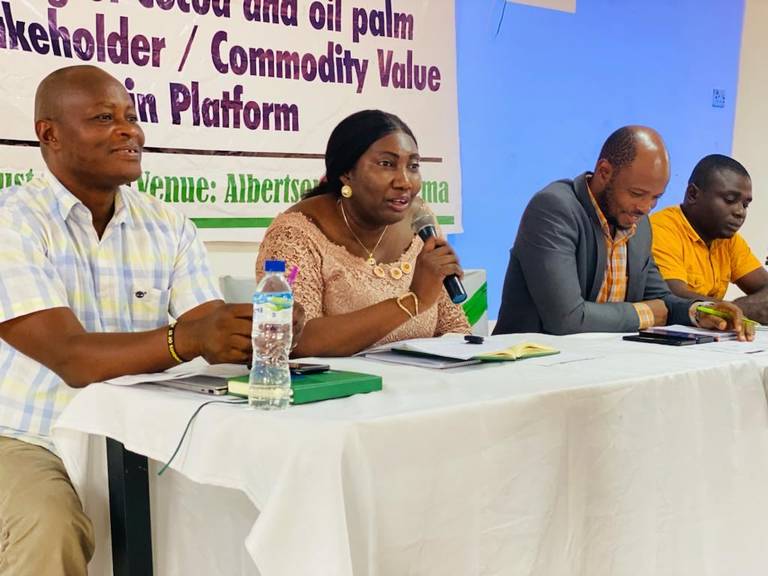
Agriculture Value Chain Development Project Launches Oil Palm and Cocoa Multi-Stakeholder/ Commodity Value Chain Platform
The Agriculture Value Chain Development Project (AVDP) launched an innovative Oil Palm and Cocoa Multi-Stakeholder/ Commodity Value Chain Platform on August 9, 2023, at Albertson in Kenema. The…