

Climate resilience
With financing from the Adaptation Fund, AVDP helps farming households cope with changing rainfall and heat, through irrigation, agroforestry and mixed cropping, working with SLMet and the EPA.
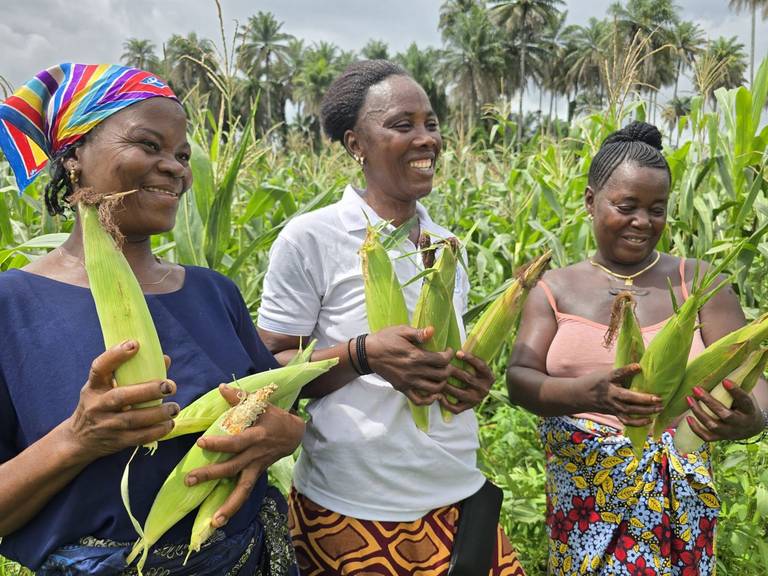
What AVDP does
- Irrigation from boreholes for dry-season farming
- Agroforestry and intercropping on tree-crop farms
- Mixed cropping to spread risk across crops
How a solar borehole waters vegetables, and a village
AVDP is building solar-powered boreholes with irrigation so vegetable growers can farm through the dry season.
Step 1 of 6
Sunlight powers the pump
Solar panels turn sunlight into electricity for a pump at the bottom of the borehole. There is no fuel to buy and no generator to run.
Show as table
| Step | What happens |
|---|---|
| 1. Sunlight powers the pump | Solar panels turn sunlight into electricity for a pump at the bottom of the borehole. There is no fuel to buy and no generator to run. |
| 2. Water comes up from underground | The pump lifts groundwater up the borehole, even in the dry season when streams and hand-dug wells run low. |
| 3. A raised tank stores it | The water fills a tank on a tower. From there it flows out by gravity whenever it is needed, including after the sun goes down. |
| 4. Drip lines water the vegetables | Pipes carry the water to drip lines along each bed, which give every plant a little water at its roots and waste very little. |
| 5. Clean water for the community | In some communities the same borehole also has a tap, so families can collect water for drinking and cooking close to home. |
| 6. Vegetables through the dry season | With water all year, farmers keep growing tomato, pepper and onion after the rains end, and have more to eat and to sell. |
Related news and notices
Related news
All news and stories Video
Collective investment in smallholder farming
With funding from the Government of Sierra Leone, IFAD, OPEC, and the Adaptation Fund, the Agriculture Value Chain Development Project (AVDP) is revolutionizing smallholder farming by investing in…